
The Definitive Industrial Property Forecast for 2026
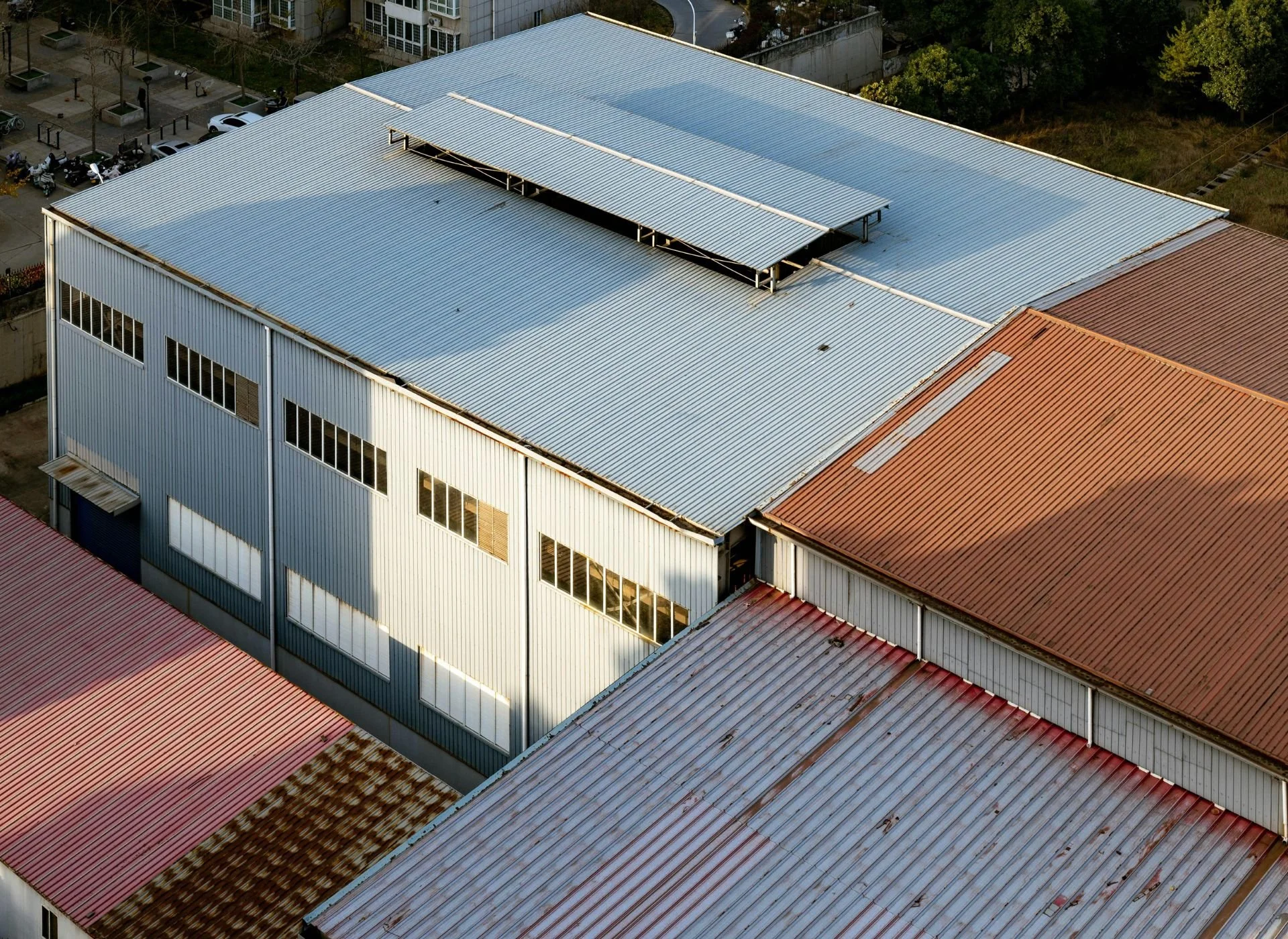
In this article, we’ll explain what’s changing in the DMV’s industrial real estate market in 2026, and what it means for anyone buying, building, or leasing space.
The biggest shift is that the region is no longer moving as one market: warehouse demand is still there, but the scramble for electricity and data center sites is shaping prices and locations. In Northern Virginia, land with reliable power is so valuable that many traditional warehouse users are being pushed farther out to find deals that make financial sense. Around Baltimore, freight and port-related growth is getting a boost from better rail connections, strengthening the area’s role in moving goods along the East Coast. The common thread is power, which is starting to decide which projects can move forward and which ones will be delayed.
Key Takeaways
Power is the new gatekeeper: in Northern Virginia, grid constraints are separating projects that can move forward from projects that cannot, and investors are pricing buildings differently based on how much power is secured.
Data centers are reshaping “industrial” in Northern Virginia: developers can pay up to $3M to $4M per acre for powered land, making it nearly impossible for standard warehouse projects to compete, which pushes traditional users into outlying submarkets.
Baltimore’s logistics outlook strengthens in early 2026: the Howard Street Tunnel expansion enables double-stacked rail containers, which is expected to increase port volume and drive new demand for nearby industrial space tied to freight handling.
Advanced manufacturing is a real demand driver, not a footnote: Micron’s expansion in Manassas is drawing suppliers and support services that need nearby flex and industrial space, tightening smaller-format availability in that corridor.
Suburban Maryland and D.C. are defined by scarcity and “close-in” necessity: Prince George’s County is absorbing tenants priced out of Northern Virginia as the rent gap narrows, while D.C. industrial space remains critically scarce, keeping rents elevated because many service businesses cannot relocate far from the city.
The post-boom reset and why new supply drops in 2026
By 2026, the industrial market is working through the aftereffects of a building wave that peaked in late 2024 and 2025. Vacancy, which climbed to about 7.5 percent by late 2025, is expected to top out near 7.9 percent in mid-2026 before easing. That peak reflects projects funded before higher rates fully changed the economics.
The bigger shift is what happens next. With borrowing costs high and lenders cautious through 2024 and 2025, far fewer new projects broke ground. Deliveries in 2026 are expected to fall more than 70 percent from the pandemic-era peak.
That creates a short stretch when less new space comes online even as demand steadies. In Baltimore’s I-95 North corridor, the slowdown gives the market time to absorb existing buildings and stabilize by late 2026. In Northern Virginia, where land is already tight, limited new supply keeps pressure on rents even if conditions soften nationally.
| Submarket | 2026 Rent Growth Forecast | Driver |
|---|---|---|
| Northern Virginia | 4.0% - 6.0% | Extreme supply constraints; displacement by data centers; high barriers to entry. |
| Baltimore / I-95 | 3.0% - 4.0% | Port expansion demand meeting stabilizing supply; value proposition vs. NoVA. |
| Suburban Maryland | 2.0% - 3.0% | Balanced market; demand from local distribution and bio-tech. |
| Washington D.C. | 5.0%+ (Class C) | Critical scarcity; zero new supply; captive tenant base. |
Why companies are still stocking up in 2026
By 2026, the lesson from the last few years has hardened into policy. Companies that once tried to keep inventory lean now treat extra stock as insurance. They do it not because it is elegant, but because the cost of being caught short is worse than the cost of carrying more.
That decision leaves a physical footprint. More product on shelves means more product in buildings. Across the country, many operators are planning for roughly 15 to 20 percent more warehouse space than they needed before the pandemic, simply to hold the buffer they are no longer willing to live without.
In the DMV, the logic is sharpened by the customer. This is a region where incomes are high and convenience is not a luxury, it is an expectation. Same-day and next-day delivery are not marketing claims anymore, they are the baseline, and the companies that miss the window lose the next order.
To meet that standard, distribution has to move closer to where people live. That means more smaller sites positioned to move goods quickly, and more careful routing to avoid the congestion that can turn a short drive into a missed promise. The region’s road projects matter because they make time less unpredictable, which is the enemy of fast delivery.
That is why the I-95 Express Lanes Northbound Extension is worth watching. It is scheduled to finish in 2027, with parts opening in 2026. For logistics operators, the value is not speed for its own sake. It is the ability to plan a delivery route with fewer surprises.
Why trade policy is showing up in warehouse decisions
Industrial real estate likes to present itself as practical and apolitical. In 2026, that pretense is harder to maintain. Tariffs, trade disputes, and shifting rules have pushed more companies to bring parts of their supply chains closer to North America, even if the biggest factories still favor the Southeast or Mexico.
The DMV’s role is more targeted. It tends to win specialized production and support operations that benefit from proximity to government, research, and an educated workforce. The logistics system then does what it always does. It follows.
Near the Port of Baltimore, that shows up in demand for Foreign Trade Zones and bonded warehouses. These tools give importers flexibility when policy changes threaten margins. Goods can be stored, cash outlays can be delayed, and inventory can move when the numbers make sense, not when a ship arrives.
Northern Virginia is being pulled by a different current. Semiconductor supply chains and national security priorities are creating reasons for advanced manufacturing and its suppliers to cluster. In Manassas, Micron’s presence is part of that story, drawing related operations into orbit and adding a second industrial identity to a region already defined by logistics.

Northern Virginia’s industrial market is now built around data
In Northern Virginia, “industrial real estate” is starting to mean something different. The market is no longer led by the storage of physical goods, but by the processing and storage of digital information. By 2026, Loudoun, Prince William, and more of Fairfax are firmly positioned as the East Coast’s dominant data center cluster.
That success is also a tradeoff. The same forces that make the region essential for computing are crowding out the older industrial uses that once defined it. In practical terms, Northern Virginia is running out of room for both.
Why land prices stopped making sense for warehouses
The defining feature of 2026 is the gap between what a warehouse can earn and what a data center can earn. A modern distribution building might support rents around $15 to $18 per square foot. A data center’s economics are driven by power, which can generate far more revenue from the same acreage.
That difference shows up in land bids. In prime corridors like “Data Center Alley,” data center developers can push land values to $3 million to $4 million per acre. Once prices reach that level, warehouse development stops penciling out.
What gets built changes, and what already exists gets erased
At those land valuations, it becomes extremely difficult to build a standard warehouse and still hit a viable return. The result is that new speculative logistics capacity is no longer being added in the core Northern Virginia market. Existing warehouses face a different risk, which is not vacancy, but replacement.
Sterling has become the clearest symbol of that shift. The former AOL headquarters is being demolished to create the PowerHouse Data Center campus. In its place, 1.2 million square feet of data center space is planned across 43 acres, with delivery targeted for mid-2026.
Amazon’s Sterling plans show how fast “best use” has changed
Amazon is making the same wager, and at scale. The company filed to demolish nine office buildings in Sterling to build four data center facilities. In this market, even functional office parks are treated as temporary when compared to the revenue potential of powered computing sites.
Zoning gets tighter, and the approvals become the bottleneck
In 2025, local governments began pulling the brakes on the pace of data center development. Community concerns about noise, visual impact, and power infrastructure pushed counties to adopt stricter rules. Those changes set the terms for what can realistically deliver in 2026.
Loudoun County’s late-2025 “Phase 2” standards are the inflection point. The key change was the elimination of by-right development for data centers in many districts. Projects that once could proceed automatically now typically require a legislative Special Exception, also referred to as SPEX.
Why 2026 supply can stay tight even with nonstop demand
The new approval process adds time. In practice, it can extend timelines by 12 to 18 months. Projects that did not secure approvals before February 2025 are pushed into a public hearing process that slows delivery.
This is one reason new data center shells arriving in 2026 are more limited than demand would suggest. It helps keep vacancy exceptionally low, including a cited 1.6% across primary markets. In a market built on speed to market, the most valuable sites are the ones that can start quickly.
The shift south into Prince William County
As Loudoun tightens, capital moves. Prince William County has become the next frontier, with “Digital Gateway” and its surrounding overlay district drawing developers south. At the same time, the county is trying to avoid becoming a one-industry economy.
Prince William’s land planning work is meant to preserve space for other uses, including advanced manufacturing and logistics. Even so, data centers have accounted for more than 90% of commercial growth in recent years, and that dominance continues through 2026. In other words, diversification is the goal, but momentum is pulling in one direction.
The vacancy paradox in Northern Virginia
The vacancy story sounds contradictory until we separate the asset types. Data center vacancy is functionally near zero, and pre-leasing for projects under construction often exceeds 74%. Demand is so strong that much of the next wave is spoken for before it opens.
Traditional industrial vacancy is also low, projected around 3.5% to 4.0% for 2026. That is not because warehouse demand is surging. It is because supply is shrinking as warehouses are demolished and the remaining inventory becomes harder to replace.
This is where the spillover becomes visible. Service tenants like plumbers, last-mile operators, and local distributors still need close-in space. They end up competing intensely for the remaining small-bay industrial product, even as the region’s headline growth is driven by servers, not shipments.
Grid Constraints and the Rise of AI Factories
If we want to understand what gets built in the DMV in 2026, we have to start with electricity. Not interest rates. Not even demand. The market is running into a basic constraint that no amount of capital can wish away.
In this region, power has become the gatekeeper. It decides which projects move, which projects stall, and which sites become valuable simply because they can turn on. The growth story is still there, but it is increasingly routed through a single question. Can the grid support it.
The Dominion bottleneck and the new ceiling on growth
Dominion Energy has flagged a transmission bottleneck in eastern Loudoun County, the heart of “Data Center Alley.” It is not a small inconvenience. It is a hard limit on how many new large users can connect until major upgrades are completed.
For a while, the market hoped the constraint would ease by 2026. Updated projections now place the critical 500kV transmission loop rebuild in a 2026 to 2028 window, which means the core corridor stays constrained through 2026.
The practical effect is a cap. New data center growth in the core market is limited by power access, not by the appetite to build. Developers with “will-serve” letters secured years ago can proceed. Developers without them are left holding land and waiting, often until 2028.
That delay has created a new kind of value. “Powered shells,” buildings with a power allocation already attached, are trading like a separate asset class. In a market where time is money, electricity is now part of the deed.
Wiring the region to catch up
Dominion’s response is a heavy buildout, aimed at making the grid fit the new load. The 500kV loop rebuild is the spine of that effort, replacing aging lines and upgrading substations so they can handle the density of today’s compute. AI racks draw far more power per square foot than the cloud era that came before them.
More generation is coming, too. The Coastal Virginia Offshore Wind project, a 2.6-gigawatt installation about 27 miles off the coast, is scheduled to start delivering power to the grid in late 2026. But generation is only half the story.
The bottleneck in Ashburn is transmission. Even if more power is produced, it still needs a path to reach the place where demand is concentrated. In Northern Virginia, the constraint is not whether the electrons exist. It is whether they can get there.
The rise of the “power-flexible” data center
Constraints tend to produce new rules, and 2026 is forcing a new kind of facility into the spotlight. The emerging model is the “grid-interactive” data center, designed to behave less like a constant drain and more like a controllable load.
The flagship example in this forecast is the Nvidia and Emerald AI project in Manassas, known as the Aurora AI Factory. Scheduled for delivery in the first half of 2026, it is described as a 96-megawatt facility built to be power-flexible.
The concept is simple in theory and meaningful in practice. Traditional data centers draw steady power. A power-flexible facility can adjust its consumption based on grid conditions. During peak stress, it can throttle down workloads so the grid has more breathing room for homes and businesses.
For developers, the advantage is not just public relations. A project that can reduce load when the grid is strained is easier for a utility to approve than one that only adds demand. It turns a data center into something closer to a partner, behaving like a “virtual power plant” rather than a passive user.
By late 2026, this model is expected to move from optional to expected, especially in Prince William and Loudoun. In a market defined by constraints, flexibility is becoming the price of admission.
The semiconductor anchor in Manassas
Data centers may dominate the conversation, but the I-66 corridor is being reshaped by a different kind of industrial engine. It is less visible from the highway, and far more labor intensive. The driver is advanced manufacturing, pulled forward by national security priorities and the incentives created by the CHIPS Act.
In Manassas, that shift is already tangible. The work is not about storing goods or routing packages. It is about making a product the modern economy still cannot function without.
Micron’s bet and what it changes around it
Micron’s fabrication plant in Manassas holds an unusual position in American manufacturing. It is described as the only U.S. facility producing DRAM memory chips. In response to supply chain vulnerabilities exposed in recent years, the company committed more than $2 billion to expand the site, and the expansion is operating and scaling through 2026.
Unlike a data center, a semiconductor plant brings density in a different form. It needs people, and it needs specialized skills. The expansion created more than 340 high-skilled manufacturing jobs and supports a workforce of over 1,300, which turns the facility into an employment anchor, not just a piece of infrastructure.
The bigger story is what happens next. A semiconductor plant does not stand alone. It pulls an ecosystem into its orbit, from specialty chemical suppliers to precision equipment maintenance to logistics providers that can operate in clean-room conditions.
That ecosystem needs space, and it wants to be close. Demand rises for flex-industrial and R&D space in Manassas and western Prince William County, where suppliers compete for proximity to the “mothership.” Small-bay industrial vacancy tightens first, because that is where many of these firms start and scale.
The bypass markets to the south
As Manassas and Prince William become more expensive, the map stretches. Traditional distribution users, the ones that do not need chip-adjacent space or data center power, have a simple response. They move.
Stafford and Spotsylvania are emerging as the next southern frontier for distribution. The appeal is straightforward. Land is cheaper, the sites can support big buildings, and the drive to the D.C. population is still workable.
That is why we are seeing speculative big-box development in these counties. The buildings are designed for regional distribution that can no longer afford to be close-in. The growth is not glamorous, but it is rational, and it is how the industrial market adjusts when the core becomes too expensive to serve.

Baltimore’s logistics moment in 2026
By 2026, the region is using long-planned infrastructure to push itself into a bigger role on the East Coast freight map.
The Howard Street Tunnel and why it matters
The biggest single change for the Mid-Atlantic industrial market in 2026 is the Howard Street Tunnel expansion. It is the kind of project that sounds technical until it rewires a region’s cost structure.
The tunnel was built in 1895 and runs 1.7 miles under downtown Baltimore. Its clearance limits prevented CSX from running double-stacked container trains, which kept the Port of Baltimore from competing for a wider set of inland cargo.
That constraint had real consequences. Freight headed for the Midwest often had to be trucked to other rail points, or routed through competing ports like Norfolk and New York and New Jersey. Baltimore was strong, but boxed in.
The early 2026 milestone
The expansion is set to deliver in early 2026 through a partnership that includes CSX, the State of Maryland, and the Federal Railroad Administration. The work lowers track and modifies the tunnel so it can reach the needed 21-foot clearance.
Once double stacking is possible, rail costs drop. That makes Baltimore more competitive for cargo that could go to multiple ports and still reach places like the Ohio Valley and Chicago efficiently.
More containers means more industrial space
The project is expected to add about 160,000 containers per year moving through the port. That volume does not disappear into spreadsheets, it has to be handled somewhere.
We should expect a jump in demand for facilities that transfer freight from ships and rail into domestic distribution networks. In plain terms, these sites unload containers and reload goods onto 53-foot trailers or other inland transport for the next leg.
The forecast points to the I-95 North corridor in Harford and Cecil Counties as the pressure valve. Vacancy softened there in 2025 because new speculative buildings arrived first. In 2026, the tunnel upgrade is expected to pull that space back into use quickly.
Tradepoint Atlantic keeps scaling
Tradepoint Atlantic at Sparrows Point remains the region’s industrial engine. It sits on the former Bethlehem Steel site and functions like a purpose-built logistics district.
A major marker is the partnership with Terminal Investment Limited, tied to Mediterranean Shipping Company, to build a dedicated container terminal. By 2026, construction and pre-development are underway, with the ambition of pushing Baltimore toward the number three container port on the East Coast.
The tenant roster reinforces the point. Tradepoint Atlantic hosts Amazon, FedEx, Under Armour, and Home Depot, supported by deep-water access, rail connections, and immediate highway links. The report expects millions of square feet of new Class A warehouse space to deliver in 2026, with absorption staying strong.
What happens along the I-95 North corridor
From White Marsh through Harford County to Cecil County, this is Baltimore’s primary big-box warehouse market. Entering 2026, it is coming off a brief period of too much space.
Vacancy hovered around 8.9 percent in late 2025 after a wave of speculative deliveries. The tunnel expansion changes the trajectory by creating a stronger reason for logistics providers to grow their footprint here.
The forecast expects net absorption in this corridor to lead the region in 2026. Rents that flattened are projected to start rising again by Q3 2026, with growth in the 3 to 4 percent range as the balance shifts back toward landlords.
Suburban Maryland becomes the close-in fight for space
Suburban Maryland plays a different role than Baltimore or Northern Virginia. This is not primarily about national distribution, and it is not about housing servers. It is about serving a dense population, keeping delivery promises, and supporting a federal and bio-health economy that still runs on physical space.
In 2026, that role comes with pressure. The closer a building is to people and institutions, the more it matters, and the harder it is to replace. Suburban Maryland is where proximity turns into pricing power.
Prince George’s County becomes the release valve
As Northern Virginia gets more expensive and harder to build in, industrial users look east across the Potomac. Prince George’s County has become the practical alternative for tenants who still need access to D.C. but cannot afford the Northern Virginia premium.
Beltsville is the clearest signal of where the market is heading. Logistics Property Co. is developing the Beltsville Logistics Center after a $40 million acquisition and development effort. The project is scheduled to deliver in August 2026 and totals 270,000 square feet.
The location is the point. Sitting just off I-95 and the ICC, it offers reach into the D.C. population without forcing every route through the city’s most punishing bottlenecks. That is the last-mile appeal in one sentence.
Historically, rents in Prince George’s County have run 20 to 30 percent below Northern Virginia. In 2026, the gap is narrowing as space tightens and developable land becomes harder to find. With vacancy around 9 percent and limited new supply, landlords have more room to push.
This is also where Northern Virginia’s displacement shows up in real time. Tenants priced out of Loudoun and Fairfax do not stop needing buildings. Many land here, which keeps pressure on the market even when national conditions soften.
The Purple Line changes industrial nodes in a quiet way
The Purple Line is not an industrial project, but it is changing the ground underneath the industrial market. Transit-oriented development around New Carrollton and Riverdale removes some older industrial stock. At the same time, it can make the remaining parks easier to staff.
In a labor-tight environment, that matters. Many warehouse users do not struggle to find demand. They struggle to find workers who can reliably get to the job and stay. Improved access can make an older industrial park more competitive than its building quality would suggest.
Montgomery County’s industrial market is really about life sciences
Montgomery County is not competing on big-box distribution. Its industrial identity is shaped by the bio-health ecosystem along I-270, one of the country’s strongest life sciences clusters.
That shows up in what happens to the building stock. Standard flex-industrial space in places like Gaithersburg and Rockville is often converted into lab and research facilities. Each conversion removes space from general industrial use and keeps vacancy for traditional industrial tenants tighter than it would be otherwise.
The outlook for 2026 is stability, not volume. Demand from federal agencies like the NIH and FDA, along with private biotech firms, supports steady occupancy. With very little land available for large-scale new industrial development, the market tends to move through renewals, higher costs, and building retrofits rather than new construction.
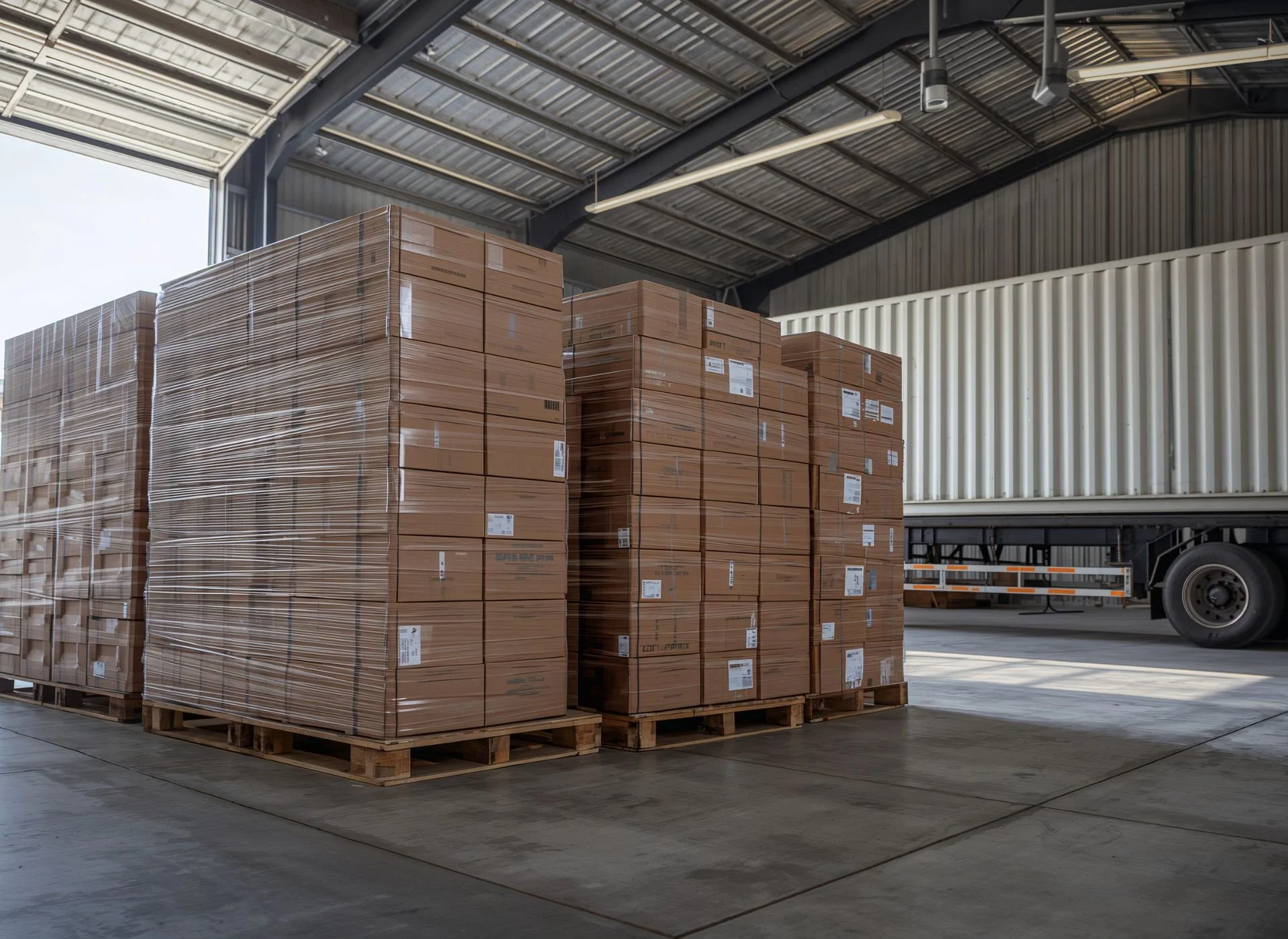
Washington, D.C. and the industrial space it cannot replace
In Washington, industrial real estate is being edged out, one parcel at a time. The District still depends on small warehouses, repair shops, and distribution yards to keep the city running, but the land beneath them is now treated as a prize for other uses.
That contradiction sits at the center of the story in 2026. D.C. wants more housing. D.C. also needs places where trucks can unload, where contractors can stage materials, where food can be stored, and where city services can be maintained. The city’s daily life is built on spaces that are increasingly difficult to justify in a high-priced, housing-starved market.
The PDR squeeze
The District’s Production, Distribution, and Repair zones are not glamorous, but they are essential. They support fleet maintenance, construction supply chains, food distribution, and the last mile of delivery that residents now expect as routine. When these uses lose ground, the costs do not disappear. They move, and then they come back into the city as time, traffic, and higher prices.
The scarcity is already severe. Vacancy for small-bay industrial space under 50,000 square feet hovers around 3 to 4 percent, and there is virtually no new supply coming. In a normal market, that would read as strength. In D.C., it reads as a warning sign that the city has little margin left.
Rent follows the scarcity, and it does so in an odd way. These tenants are not shopping for prestige. They are buying proximity. A bakery distributor, an HVAC contractor, or a local delivery operator cannot push operations to the suburbs without changing the service they sell. The result is that older industrial sheds in Northeast D.C. can command rents that rival high-end suburban office space, not because the buildings are exceptional, but because the alternatives are disappearing.
Housing conversions and the land that changes hands
The District’s dominant real estate push is office-to-residential conversion, a response to a housing shortage and a downtown office market that no longer fills buildings the way it once did. The conversions are concentrated in the core, but the ripple spreads outward. Industrial parcels near Metro stations become tempting targets because they are easier to sell as housing and easier to argue for politically.
Deanwood offers a clear example. Land near the Metro station that was previously zoned for PDR uses is being rezoned for mixed-use development that includes residential and a library. In planning terms, it is a reasonable trade. In industrial terms, it is a reduction in the city’s working capacity.
The hidden cost of a cleaner skyline
The tradeoff is often framed as a battle between housing and warehouses. In practice, it is a question of who absorbs the cost when the city sheds its industrial footprint. Service providers that cannot find space in the District do not stop serving the District. They drive in from Prince George’s County and beyond.
That shift adds miles and time to every job. It increases congestion. It raises delivery costs. It turns simple logistics into a daily tax on construction, maintenance, and commerce.
In 2026, city leaders are trying to solve a real housing need while preserving the basic mechanics of a functioning city. The risk is that D.C. keeps winning the visible fight for housing while losing something quieter, the short-distance industrial network that makes the city work on an ordinary day.
Where the money is going in 2026
By 2026, the industrial investment market has warmed up again after the deep chill of 2023 and 2024. Deals are getting done. Capital is moving. The difference is that the market is no longer rewarding broad bets.
Investors are behaving like underwriters again. They are not buying “industrial” as a category. They are buying specific advantages that cannot be rebuilt next door.
One advantage sits above all the others. Power has moved from an operating detail to a pricing feature. A building with 20 megawatts of secured capacity can trade on a different set of assumptions than an identical building with 2 megawatts, even if the tenant looks the same on paper.
Cap rates reflect that selectivity. For Class A logistics product in the DMV, the forecast points to modest cap rate compression that stabilizes around 5.0 to 5.5 percent, with data center shells pricing tighter. The Washington region’s federal backbone still matters here. In a world where investors keep asking what is truly durable, the DMV continues to read as a market where demand is less likely to vanish overnight.
What rent growth looks like across the region
Northern Virginia is projected to lead, with rent growth in the 4.0 to 6.0 percent range, driven by supply constraints and the way data centers displace traditional industrial space.
Baltimore and the I-95 corridor are projected in the 3.0 to 4.0 percent range, as port-driven demand meets a supply picture that starts to look more balanced.
Suburban Maryland is forecast to grow 2.0 to 3.0 percent, supported by steady local distribution needs and the bio-health economy.
Washington, D.C. is the outlier. Class C rents can rise 5.0 percent or more because scarcity is extreme, new supply is effectively nonexistent, and many tenants have no practical alternative to staying in the city.
The bypass strategy
The smarter play in 2026 is not to chase the most obvious story. It is to buy the places that benefit from it without being priced as if everything must go right.
Northern Virginia is increasingly priced for perfection, and in many cases priced for data center economics rather than warehouse economics. That pushes a different kind of investor behavior. Capital looks outward, toward “ring” counties where distribution still works and land values have not been distorted by the AI boom.
This is the bypass strategy. Investors target counties like Stafford, Spotsylvania, Frederick in Maryland, and Cecil. These markets sit close enough to serve the region, and they have the physical fundamentals that matter for logistics. They also offer a cleaner underwriting story because pricing is still tied to freight, not to server demand.
Two ways the 2026 story could break
The best case is an infrastructure unlock.
If Dominion can accelerate the 500kV loop timeline and open up power capacity late in 2026 instead of 2028, the data center pipeline regains speed. If the Howard Street Tunnel opens smoothly in the first quarter of 2026 and port volumes jump by roughly 15 percent, Baltimore’s logistics tailwind arrives fast. The result is a region where both engines run at once, and the DMV outperforms the rest of the country on rents and absorption.
The stagnation case is gridlock.
If transmission upgrades slip because of permitting delays or equipment bottlenecks, power access drifts toward 2029. Loudoun land transactions freeze because the core constraint does not move. Capital shifts to markets with easier power paths, like Columbus and Atlanta, and Northern Virginia land prices correct. Baltimore, however, holds up better because its port and rail fundamentals are not dependent on the same power pipeline.
A market that split into specialties
By 2026, the DMV is no longer one industrial market. There are several, and each one plays by different rules.
Northern Virginia is a digital engine limited by physical inputs. Baltimore is a logistics market gaining new reach because infrastructure finally catches up. Suburban Maryland is the close-in service layer that keeps the population and federal economy supplied.
The winning strategy across all of them is to stop thinking in generic cycles and start thinking in hard constraints. Power feeds, rail access, and deep-water capacity are the assets that cannot be reproduced quickly. In 2026, those are the things that decide who wins, long after the headlines move on.

Matthew Antonis
Matthew Antonis is a leading figure in the DMV market, recognized for his specialized expertise in Industrial Property and unwavering dedication to client success. His career is defined by high-impact transactions and a data-driven approach that consistently sets new benchmarks in the region.
Matthew made his mark immediately with a monumental debut transaction: securing 161,792 square feet across 11.73 acres, encompassing 14 buildings for $15.2 million. This early success set the tone for a career characterized by lucrative deals and repeat clientele who trust his deep knowledge of the industrial sector.
References
Why Data Center Land Prices Are Skyrocketing in Late 2025, accessed January 6, 2026, https://www.datacenters.com/news/data-center-land-deals-why-prices-are-skyrocketing-in-2025-s-second-half
CSX Reopens Expanded Howard Street Tunnel Ahead of Schedule, Strengthening East Coast Freight Growth, accessed January 6, 2026, https://www.csx.com/index.cfm/about-us/media/press-releases/csx-reopens-expanded-howard-street-tunnel-ahead-of-schedule-strengthening-east-coast-freight-growth/
Howard Street Tunnel reopening - Hatch, accessed January 6, 2026, https://www.hatch.com/About-Us/News-And-Media/2025/12/Howard-Street-Tunnel-reopening
Loudoun County, Virginia: Data Center Capital of the World “A Strategy for a Changing Paradigm”, accessed January 6, 2026, https://www.loudoun.gov/ArchiveCenter/ViewFile/Item/13979
Dateline Ashburn: Data Centers Drive New Energy Disputes in Northern Virginia, accessed January 6, 2026, https://broadbandbreakfast.com/dateline-ashburn-data-centers-drive-new-energy-disputes-in-northern-virginia/
Emerald AI Teams with NVIDIA and Partners to Develop Power-Flexible AI Factory and Reference Design to Unlock 100 GW of Grid Capacity and Supercharge the AI Revolution - Ritovex - Webflow Ecommerce Website Template, accessed January 6, 2026, https://www.emeraldai.co/blog/launching-the-first-power-flexible-ai-factory-with-nvidia
CoStar's U.S. industrial projections remain unchanged through 2026, accessed January 6, 2026, https://www.costargroup.com/press-room/2025/costars-us-industrial-projections-remain-unchanged-through-2026
Industrial real estate outlook - PwC, accessed January 6, 2026, https://www.pwc.com/us/en/industries/financial-services/asset-wealth-management/real-estate/emerging-trends-in-real-estate-pwc-uli/property-type-outlook/industrial.html
Northern Virginia Industrial Figures Q4 2025 | CBRE, accessed January 6, 2026, https://www.cbre.com/insights/figures/northern-virginia-industrial-figures-q4-2025
Baltimore's Industrial Market is Stronger Than Ever, And There's More to Come, accessed January 6, 2026, https://rebusinessonline.com/baltimores-industrial-market-is-stronger-than-ever-and-theres-more-to-come/
I95ETLNB Update Overview | MDTA - Maryland.gov, accessed January 6, 2026, https://mdta.maryland.gov/I95ETLNB/Overview
marketbeat - baltimore - industrial q3 2025 - Cushman & Wakefield, accessed January 6, 2026, https://assets.cushmanwakefield.com/-/media/cw/marketbeat-pdfs/2025/q3/us-reports/industrial/baltimore_americas_industrial_marketbeat_q32025.pdf?rev=ace5174d36144fe08c0f8dba3e1aa985
Virginia | Micron Technology Inc., accessed January 6, 2026, https://www.micron.com/us-expansion/va
Northern Virginia Industrial Figures Q3 2025 | CBRE, accessed January 6, 2026, https://www.cbre.com/insights/figures/northern-virginia-industrial-figures-q3-2025
Former AOL Headquarters Demolition Underway; New Data Center to be Built - Northern Virginia Magazine, accessed January 6, 2026, https://northernvirginiamag.com/news/2023/10/11/former-aol-headquarters-demolished-to-make-way-for-new-data-center/
AOL HQ Makes Way for Hyperscale Center - PowerHouse Data Centers, accessed January 6, 2026, https://www.powerhousedata.com/news/vacant-aol-hq-near-dulles-airport-demolished-for-hyperscale-data-center
Tysons Developer's Data Center to Replace AOL HQ : r/nova - Reddit, accessed January 6, 2026, https://www.reddit.com/r/nova/comments/175kvnf/tysons_developers_data_center_to_replace_aol_hq/
Amazon to demolish 9 Virginia office buildings to make way for data centers, accessed January 6, 2026, https://www.constructiondive.com/news/amazon-demolishing-9-offices-data-center/652748/
Phase 2: Data Center Standards & Locations | Loudoun County, VA - Official Website, accessed January 6, 2026, https://www.loudoun.gov/6222/Phase-2-Data-Center-Standards-Locations
Loudoun County, Virginia, Eliminates By-Right Data Center Development - Holland & Knight, accessed January 6, 2026, https://www.hklaw.com/en/insights/publications/2025/04/loudoun-county-virginia-eliminates-by-right-data-center-development
North America Data Center Trends H1 2025 - CBRE, accessed January 6, 2026, https://www.cbre.com/insights/reports/north-america-data-center-trends-h1-2025
TARGETED INDUSTRY LAND NEED ANALYSIS - Prince William County, accessed January 6, 2026, https://www.pwcva.gov/assets/2022-05/Camoin%20-%20Targeted%20Industry%20Land%20Need%20Analysis%20-%20PWC-5.13.2022.pdf
Revenues - Prince William County Government, accessed January 6, 2026, https://www.pwcva.gov/assets/2025-07/aFY26--04--Revenues.pdf
Q4 2024 U.S. Industrial Real Estate Market Report | Our Insights - Plante Moran, accessed January 6, 2026, https://www.plantemoran.com/explore-our-thinking/insight/2025/plante-moran-realpoint/industrial-real-estate-market-report-2024-q4
Power Line Projects | Dominion Energy, accessed January 6, 2026, https://www.dominionenergy.com/projects-and-facilities/electric-projects/power-line-projects
Dominion says largest US offshore wind project on track | Utility Dive, accessed January 6, 2026, https://www.utilitydive.com/news/dominion-energy-offshore-wind-earnings/804617/
Wind energy projects continue despite federal headwinds - Virginia Business, accessed January 6, 2026, https://virginiabusiness.com/dominion-coastal-virginia-offshore-wind-2026/
How the world's first flexible AI factory will work in tandem with the grid | Latitude Media, accessed January 6, 2026, https://www.latitudemedia.com/news/how-the-worlds-first-flexible-ai-factory-will-work-in-tandem-with-the-grid/
December- Micron Technology to Expand Semiconductor Manufacturing Facility in Manassas - Governor of Virginia, accessed January 6, 2026, https://www.governor.virginia.gov/newsroom/news-releases/2024/december/name-1038077-en.html
Business Beat: A Tasty Teaser for 2026 ... - Choose Manassas, accessed January 6, 2026, https://choosemanassas.org/2025/12/business-beat-a-tasty-teaser-for-2026/
Micron's $2.17B Manassas Expansion: Fairfax Impact - Perfect Choice Real Estate, accessed January 6, 2026, https://www.pcrehomes.com/blog/micron-manassas-expansion-fairfax-housing-impact/
Northern Virginia Real Estate Forecast 2026: The Boom Is Coming (County by County Breakdown) - Chris Colgan Team, accessed January 6, 2026, https://www.colganteam.com/blog/northern-virginia-real-estate-forecast-2026-the-boom-is-coming-county-by-county-breakdown/
Governor Moore Commends Launch of Double-Stack Rail Operations at Port of Baltimore, accessed January 6, 2026, https://governor.maryland.gov/news/press/pages/governor-moore-commends-launch-of-doublestack-rail-operations-at-port-of-baltimore.aspx
Baltimore Q3 2025 Industrial Market Report - Savills, accessed January 6, 2026, https://www.savills.com/research_articles/255800/382317-0
Port faces prospects of more cargo and two mega projects - News, accessed January 6, 2026, https://www.bcebaltimore.org/news/latest-news/port-faces-prospects-of-more-cargo-and-two-mega-projects/
Howard County Executive Calvin Ball Unveils Tradepoint Atlantic's Plans for New Logistics Hub in Savage, accessed January 6, 2026, https://www.howardcountymd.gov/News042225
Baltimore Industrial MarketBeat Q2 2025 - Cushman & Wakefield, accessed January 6, 2026, https://assets.cushmanwakefield.com/-/media/cw/marketbeat-pdfs/2025/q2/us-reports/industrial/baltimore_americas_industrial_marketbeat_q22025.pdf?rev=4947657687bb4be89f8865f2dd9ddac6
Washington D.C. MarketBeats | US | Cushman & Wakefield, accessed January 6, 2026, https://www.cushmanwakefield.com/en/united-states/insights/us-marketbeats/w
DMV's Next E-Commerce Powerhouse? Logistics Property Co. Bets $40M on Beltsville and It's Just the Beginning - Fox Homes Team, accessed January 6, 2026, https://www.foxessellfaster.com/blog/dmvs-next-e-commerce-powerhouse-logistics-property-co-bets-40m-on-beltsville-and-its-just-the-beginning/
Metro and Urban Atlantic celebrate groundbreaking of next phase of transit oriented development at New Carrollton | WMATA, accessed January 6, 2026, https://www.wmata.com/about/news/Metro-and-Urban-Atlantic-celebrate-groundbreaking-of-next-phase-of-transit-oriented-development-at-New-Carrollton.cfm
From Concept to Concrete: How to Execute Office-to-Residential Adaptive Reuse in Northern Virginia - Urban Land Magazine, accessed January 6, 2026, https://urbanland.uli.org/issues-trends/from-concept-to-concrete-how-to-execute-office-to-residential-adaptive-reuse
Office Conversions: Perspectives from Washington, D.C. - CBRE, accessed January 6, 2026, https://www.cbre.com/insights/viewpoints/office-conversions-perspectives-from-washington-dc
Metro selects developer for future mixed-use buildings at Deanwood Metro Station | WMATA, accessed January 6, 2026, https://www.wmata.com/about/news/Metro-selects-developer-for-future-mixed-use-buildings-at-Deanwood-Metro-Station.cfm
Colliers Report Predicts Resilient Growth for U.S. Commercial Real Estate in 2026, accessed January 6, 2026, https://www.hotelnewsresource.com/article139177.html
The 2026 Rental Market Outlook: What Northern Virginia Landlords Should Expect, accessed January 6, 2026, https://www.chamberstheory.com/blog/the-2026-rental-market-outlook-what-northern-virginia-landlords-should-expect